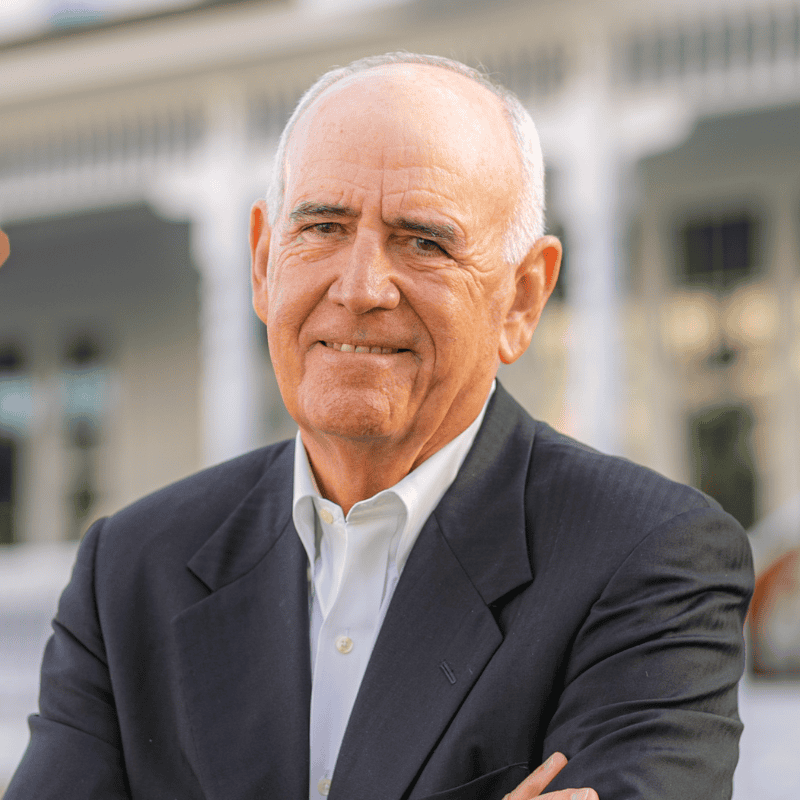
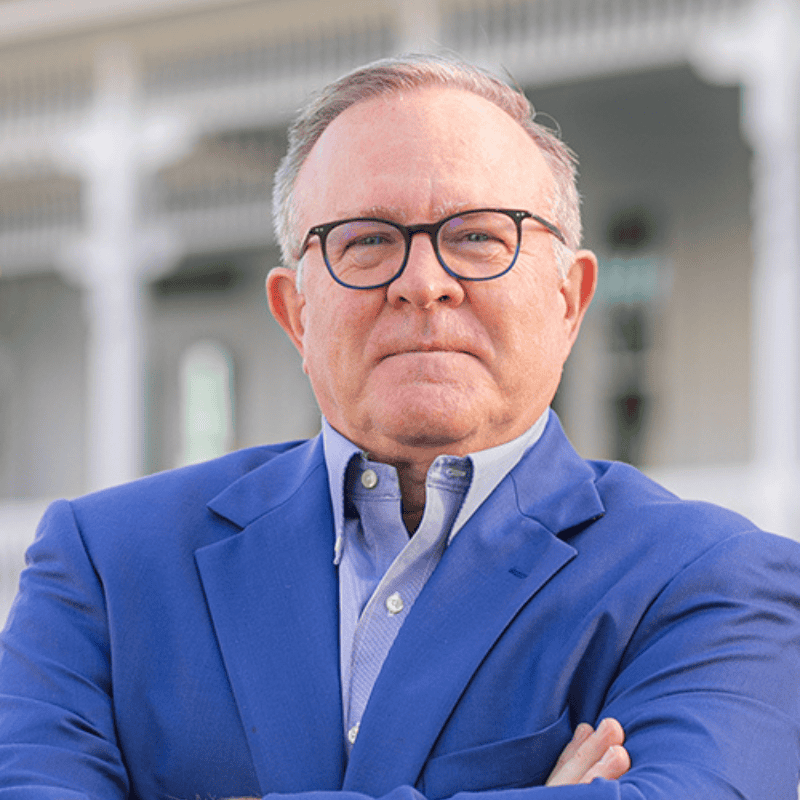
Eric Ebbert: Hello, I’m Eric Ebbert. I’m the CEO of ProVise Management Group, and I welcome you to this interview with our founder, Ray Ferrara, on the eve of what is to be our 40th anniversary celebration. We’re taking the opportunity to talk to Ray and learn a little bit about how ProVise was formed, events that occurred throughout that made ProVise what it is today, and Ray’s views on what the future of ProVise and the industry look like.
Ray Ferrara: Eric, it’s nice to be with you, and thank you very much.
Eric Ebbert: Pleasure. Ray, we’re fast approaching the 40th anniversary party of ProVise Management Group, and I appreciate the opportunity to chat with you as that comes close, and to congratulate you on the success of the business over the past four decades, and also your contribution to financial planning writ large. I think not only locally but nationally you’ve been recognized for your achievements, and all well deserved. But as an employee, as a 25-year employee, thank you, and all the best.
Ray Ferrara: Thank you. It’s been an interesting forty years.
Eric Ebbert: Good. I want to go back, I guess, even before the beginning of ProVise. You graduated from the University of Maryland with a degree in zoology. The obvious question is, what the heck were you thinking? But the more relevant one to this is, how does that lead into finance, or financial planning?
Ray Ferrara: Eric, when I went to the university in nineteen sixty-five, my thought was that I would pursue a medical career, and so hence zoology was very appropriate. And as things progressed in the 60s, there was a lot going on, race riots, Vietnam, et cetera. I came to realize late in my education that I did not want to spend another 10 years going to school. But I was so close to finishing that I was kind of stuck with the zoology, and not sure what I was going to do with it. But I got a phone call from a headhunter with IBM, who had seen an article that IBM had written about me at a meeting in Armonk in the spring of ’69, and said he wanted to hire me. And I had to laugh, saying, what are you going to do with a zoology degree?
Eric Ebbert: So it’s not only us that have that question.
Ray Ferrara: And so he said, “If you’re smart enough to get out of college, we think we’re smart enough to train you.” And so I ended up working with them for about 18 months, selling computers at NASA Goddard Space Flight Center. And that was a lot of fun, because I participated in two of the moon landings.
Eric Ebbert: Wow.
Ray Ferrara: So it was a good time. To finish answering your question, while I was with IBM, a friend of mine who got into the investment business called me up one day, and he said, “I’ve got a stock you gotta buy.” And I laughed. I said, “Phil, you know, Kim and I just got married. I’ve got a thousand dollars in savings.” And he said, “Well, I know, but you gotta do this.” And I said, “Well, what is it?” He says, “National Postal Service.” And I said, “What’s that?” And he said, “Well, they’re gonna put the post office out of business.” And I said, “How are they gonna do that?” And he said, “Well, they’re gonna deliver packages overnight.” Well, I thought that was a cool idea. So I took half of the savings, $500, and invested it into NPS. And guess what it was worth six months later.
Eric Ebbert: Not as successful. Not a 40-year run, at least.
Ray Ferrara: So I said, I’ve got to learn more if I’m going to do this. So I actually sat for the NASD, that’s FINRA today, exam. Found I liked it. One thing led to another. I started working part-time, selling life insurance and mutual funds in the evening to young kids like we were. And after six months of doing that, I left IBM, and I’m an overnight success.
Eric Ebbert: There you go. But selling mutual funds kind of door to door, if you will, was still a huge leap to financial planning. The industry didn’t exist, I’m presuming, when you started. How did you make that extra leap and become one of the pioneers in this industry? And then what led you to starting ProVise?
Ray Ferrara: So they’re really intertwined with each other. In the old days, you know, we were selling products. And in the old days, we only had 450 mutual funds to sell, not the plethora of funds that we have today. And life insurance and mutual funds together, that really was the very beginning of what, quote, was financial planning, because typically you either sold life insurance or you sold mutual fund securities, but it was rare that the two things were put together. Sounds archaic today, and it is today.
So when Kim and I came to Florida in 1979, and I went into the home office, where I was working with Western Reserve Life and the Pioneer Funds of Boston, it didn’t occur to me that I would get as reinvolved in financial planning. But, as the saying goes, on April Fool’s Day of 1987, the chairman of the board and I did not see eye to eye real well. So he gave me a chance at a second career somewhere else, fired me, and we had to start ProVise, and opened the doors just a few days later. I’d actually created the company about seven months in advance of that, because I knew it was only a matter of time that I was going to get fired. You only tell the chairman of the board no so many times.
So when I went back, I said, well, I really should pursue my Certified Financial Planner designation, CFP designation. And as I was studying for that, I came to realize that if we were going to charge fees, which is really where I wanted to go, I wanted to quit selling product and be more about advice. But we had to set up a registered investment advisory, an RIA. So I called the president of the broker-dealer, and I said, “John, you need to set up an RIA.” And he said, “What’s that?” And I said, “Well, it’s a registered investment advisor, an RIA.” He says, “I don’t understand what you’re talking about. We have IRAs.” And I said, “No, no, no, no. R-I-A.” Anyway, they didn’t want to set one up. He said, “We sell products.” And so that’s how ProVise in 1988 became a registered investment advisor. And we built on everything from that point going forward. As we transitioned, we still sold some product, but as you know, today the amount of revenue that we get from commissions, most of which are trail commissions from the past, is negligible. And we finally have gotten to where virtually all of our revenue is for giving advice, not for selling stuff.
Eric Ebbert: Did the term fiduciary exist back then, or when did that kind of come into play? And then how did you adopt that as one of the core principles of ProVise?
Ray Ferrara: So, when you’re a registered investment advisor, you are held to a fiduciary standard. At that point, when I got my CFP designation in 1990, the CFP did not require you to be a fiduciary in any way. It was just one of many different credentials that were out there. It was starting to become well known and better, but it did not require you to be a fiduciary. But being a registered investment advisor did. And so since the late 80s, we have always had the client’s best interests first and foremost in front of our own. And I think we’ve done a marvelous job in doing that.
Eric Ebbert: Over the past four-plus decades, what other pieces of advice have been meaningful, significant, that said, gee, if I didn’t get that, maybe I would have gone a different direction? Are there a couple in your mind that you can come up with?
Ray Ferrara: I don’t think so. I think most of the advice that I’ve been given that’s really helped me has been more on a general level that could be applied to any business. Three come to mind. My first mentor in the business was a fellow named Sky Seymour. Sky was up in Flint, Michigan, and he was 25 years older than I was. He was a graduate from the Naval Academy, and he sort of took me in under his wing. And the piece of advice that he gave me, and my French is terrible, was “hâtez-vous lentement,” which basically means hasten slowly. And as a young man, I wanted to hasten fast. I didn’t want to hasten slowly. And most of the people who know me know my slow speed is still a little fast. But that made me stop and think a number of times before I acted on things.
The second piece of advice that I got was when I went to Texas and went into a partnership with a fellow there, Jack Kenny, who gave me the advice of signing a document that we would agree to disagree while we were in love with each other. So it was kind of like a prenup in business, that we were going to agree how we were going to separate. And it’s a good thing he did give me that advice, because we did separate about 20 months later. And the divorce would have been a lot different had we not had that prenup. And many times that has come into play in advising clients, particularly those that are in business.
And then the third one is: what seems to be, seldom is. Or, said another way, don’t judge a book by its cover. You and I know lots of people who from the outside look like they have lots of money because they have big incomes, but they spend more than they make, and they don’t end up with a lot of money, as an example. When I was in Texas, the best way to measure somebody’s wealth out there was how much oil was on their boots, or how much manure was on their boots. That was the way you measured wealth, not the fact that they [inaudible] and talked Texan, and it is a separate language. So the horns on the hood of their Cadillac wasn’t the way to tell, either. And the rifle in the back. So those are the three pieces of advice that I’ve been able to apply numerous times in numerous places.
Eric Ebbert: I’m never gonna remember the French phrase. I’m gonna go with the similar John Wooden: be quick, but don’t hurry.
Ray Ferrara: Yeah, that’s it.
Eric Ebbert: So, okay. Were your bigger challenges when you started, or were your bigger challenges as you started to expand?
Ray Ferrara: So I think that the challenges continue throughout life. I mean, clearly, all of a sudden, three days later after being fired, I open up an office in a small little, what would it look like, a small bedroom? It was like an eight-by-ten room in an executive office, and you’re chief cook and bottle washer. You have no clients. And how do you get started after eight years of not really being back in giving advice and talking with clients? So that was a really rough dive. In fact, I didn’t pay myself for a good 18 months in starting that. And thank goodness Kim was teaching. Thank goodness we had been thrifty leading up to that time. We really did have a financial plan. And you overcome that challenge one client at a time.
And in the beginning, my idea was that we would have a small firm, maybe six or seven people. I remember telling people, if I could only get a hundred million dollars of money under management, at 25 basis points trail commissions, $250,000 a year, I’d be set for life. It’s hard to put that in perspective sometimes. But as the organization grows, the challenges multiply. You now have lots of people. It’s not just people that you’re managing, but you’re responsible for their lives. And I think one of the things that I’m most proud of, and you’ve been part of this as well, is we’ve never laid people off during all the tough times that we faced over those 40 years. We have never had to lay people off because of those tough times, because we knew that we were going to need those people when things would turn around again. And so, as you’ve heard me say on numerous occasions, we, the owners of the business, we make our money in the good times, but we earn it in the tough times. And when those tough times come, we have to make sure that everybody else is taken care of, and we come last.
Eric Ebbert: Talk about those tough times for a second. You’ve lived through Black Monday, the dot-com bust, nine eleven, the two thousand eight financial crisis, COVID. What did those things teach you, both internally and dealing with clients? Because the stress isn’t only internal. The stress is the phone. As you say, you earn your money in the bad times, and that’s when the phone calls come rushing in. So what did you learn from those, and what do you share with younger people now as they come into the business?
Ray Ferrara: So first, as you started, you were going through all of those things. I’m glad you didn’t go back to the things you…
Eric Ebbert: I started with the ones kind of in my remembrance.
Ray Ferrara: Yes. True. So I think that in going through each of those time periods, first of all, it challenges people’s values. You don’t want to think it does, but it challenges your values. And so you have to do a real gut check with yourself personally, to say, hey, it may be different, but it isn’t that different. And you just want to make sure that you don’t lose your bearings. Unfortunately, too many people do. I’d say that that’s number one.
I think the other thing is, it comes back to reminding yourself that this too shall pass. I’m going to go back to the 70s, because that was kind of the first crisis that I experienced. This was in the mid-70s, as interest rates were creeping up and Vietnam was ending, and we got into, I’m going to say, real inflation, not today’s inflation, where we were dealing not with nine percent at our height this time around, but 15, 16. I mean, I was excited to get my first mortgage at 15. I thought that was dynamite.
And so you learn that if you pay attention to your principles, the principles of not just yourself, but the principles of the science of what we do, it works. One of the best ways for me to describe it is when I learned to fly while I was in Texas. It’s really easy to end up becoming disoriented, and you have to believe your instruments. No matter how your body feels, no matter what your mind’s thinking, you have to believe the instruments, because that’s what’s going to hold you rock solid. And all of those principles that we develop in diversification, in fund selection and stock selection, all of the things that we learn about financial planning, you’ve got to believe those things. And again, it comes back to being patient, because this will pass. As I’ve described it many times, the markets are like an investor walking up a flight of stairs with a yo-yo. And we all watch the yo-yo going up and down and up and down, and we lose sight of the investor walking up the stairs. You just kind of gotta go back to the basics, suck it in, and move forward.
Eric Ebbert: I was gonna ask you, what makes a great advisor beyond the credentials? And that’s the first part of it. And the second part of it, because you talk about core values: has that changed? The things that made a great advisor 30 years ago, do they still make a great advisor today, with all that’s going on around us?
Ray Ferrara: Well, having been the chair of the CFP Board, first of all, I think it’s very important to have the CFP credential if you’re going to be in this business. And we may touch on this more later. I’d say there’s a lot of really good advisors out there that you and I know, but there’s only a handful of great ones. And the great ones do the extra five percent that the good ones know they should do, but they don’t do it. They goof off, they don’t read as much, they don’t pay attention to the new trends. In many cases, they’re not even planning for their own lives. And so the great ones just do that extra five percent. And you know, Eric, the fact is, it’s true in any profession. It’s true in any job. I mean, what makes a great electrician? It’s the one that stays up on the newest techniques. What makes a great plumber? All of the great ones do just that little extra more that the good ones know they should do, but they just don’t.
Eric Ebbert: Is that kind of the toughest part of the profession, that differentiation? Or is there something else out there that’s keeping people from being great?
Ray Ferrara: I think the only thing that holds people back from being great is themselves. It’s just, what are the sacrifices you’re willing to make? Again, what we do is not easy in a lot of different ways. And staying well educated, and finding quality education, I might add. Staying well educated is not an easy thing to do. I mean, you can go back to the One Big Beautiful Bill, and here we are, a year later, just now beginning to understand the impact that Trump accounts could have on people’s lives, on young people’s lives. You know, I’ve always said that the best dollar you invest is the first dollar. Well, how do you get any earlier than birth?
Eric Ebbert: They’re saying the best time to invest was yesterday, but birth is even as far back as you can go.
Ray Ferrara: Yeah, good point. So it’s staying on top, and staying ahead of other competitors who just don’t work as hard, because they limit themselves. You’re only limited by yourself.
Eric Ebbert: You had mentioned earlier, when we talked about developing the firm and management, that as things changed, management of people became a bigger part of your day. How did you identify the individuals that would become key contributors, and how did you shape them so that they, I don’t want to say bought in, but that they developed the same core values if they didn’t already have them, or honed them in the way that you’ve described?
Ray Ferrara: You know, over the years, you and I have been able to interview a lot of interesting people. Some of whom we made offers to, and they didn’t accept. Some that we made offers to, and they left. Some of whom stayed. And fortunately, most of them have stayed with us. Finding people who are competent financial planners is easy. Finding those that are also ethical and have the right set of values is very different. And I don’t want to just focus on our financial advisors. Finding the folks that are our client relationship advisors, the receptionists at the front door, they all have to have the right values themselves. They’ve got to care more about the people who walk in the door, the people who call, than they care about themselves during the period of time that they’re there. And that’s hard to find. And you and I are both very proud of the 35 people that we’ve got working with us today. They all have the right values, and they all do the right thing every day for our clients.
Eric Ebbert: So we have these 35 great humans that work with us, and then we have AI. Not a human, but certainly people give it human characteristics. Talk to me about how those are different, and maybe how they interact, and how one could help the other.
Ray Ferrara: Obviously, we’re all just exploring AI at this point. I look at all technology over the years as something that will eventually be helpful. I think back again to the early days of ProVise, when I was able to upgrade my computer from 128K to 256K. I thought that, well…
Eric Ebbert: And you went from your twenty-eight-hundred-baud modem to your ninety-six-hundred-baud modem, and you thought the world was wicked fast.
Ray Ferrara: Yeah. And of course, it did help us, in a lot of different ways. And I believe AI is doing and will do that. At the end of the day, here’s some things that AI can’t do. The market tanks. AI can’t convince the person to stay in the market. AI isn’t going to be able to answer those questions that we’re able to answer, because the answers to those questions are not just factual, they’re emotional. And that’s just one example of how AI is not going to replace what we’re doing. If we embrace AI, and I believe we’ve been good at not being on the bleeding edge of the sword, really, but maybe on the leading edge of the sword, with our adoption of AI, it is going to make us all better at the end of the day. Will there be some people that’ll say, “Well, I don’t need a financial planner anymore”? Absolutely. But they weren’t going to be our clients anyway, because they were probably the old 20 or 25 percent that were the do-it-yourselfers. Most people, I believe, are going to want to stay eyeball to eyeball with folks like us, and not rely on, as we know, something that still hallucinates, and hallucinates in a bad way at that.
Eric Ebbert: Yeah. I will get you out on this one. The 40th anniversary party is coming up. It’s pretty much planned. Things have been made, events scheduled. What do you think the 50th is gonna look like?
Ray Ferrara: First of all, I hope I’m here.
Eric Ebbert: I’m fine with that. But, I mean, another ten years, really, in the grand scheme of things, is still twenty-five percent. What do you see ProVise looking like in another ten years, and how big is the party?
Ray Ferrara: As I sit here at almost eighty, after forty years of ProVise, I wish I could be that forty-year-old guy again and have another forty-year run. So let me say that first. I think our profession, the things that we do, however good they have been to us for the last 40 years, I think they’re going to be exponentially better for those that are in the future. And if I could turn the clock back, I’d love to do it, just to see what those 40 years are going to look like. Maybe I can get those 10. My dad lived to 93. I had an aunt to 95, a grandmother to ninety-nine, an aunt to a hundred. So maybe my genes will let me get to that fifty.
Eric Ebbert: We’ll book your room.
Ray Ferrara: But I would tell you that as long as we always do the right thing, and you’ve heard me say it before: there’s no wrong time to do the right thing, and there’s no right time to do the wrong thing. And as long as we use that as our true north at ProVise, this company is going to continue to grow. It’s going to continue to flourish with great people. And, you know, again, I just wish I could be one of those youngsters again, because I think it’s going to be absolutely fantastic. You can put numbers to it, but the numbers don’t count. If we keep doing the right things the way we’ve done it the last 40 years, the company’s going to continue to grow, be extremely profitable, and I’m excited about what’s ahead for ProVise.
Eric Ebbert: Terrific. Ray, thank you very much for your time. And again, congratulations to you on the success of ProVise and all that you’ve accomplished in the industry. You are truly one of the pioneers and an example for us all.
Ray Ferrara: Thank you. Thank you very much. I appreciate it. It was a lot of fun.
Eric Ebbert: Thank you.




2026 Market Outlook Webinar